ServicesExit Readiness Assessment
Exit Readiness Assessment in Grand Prairie
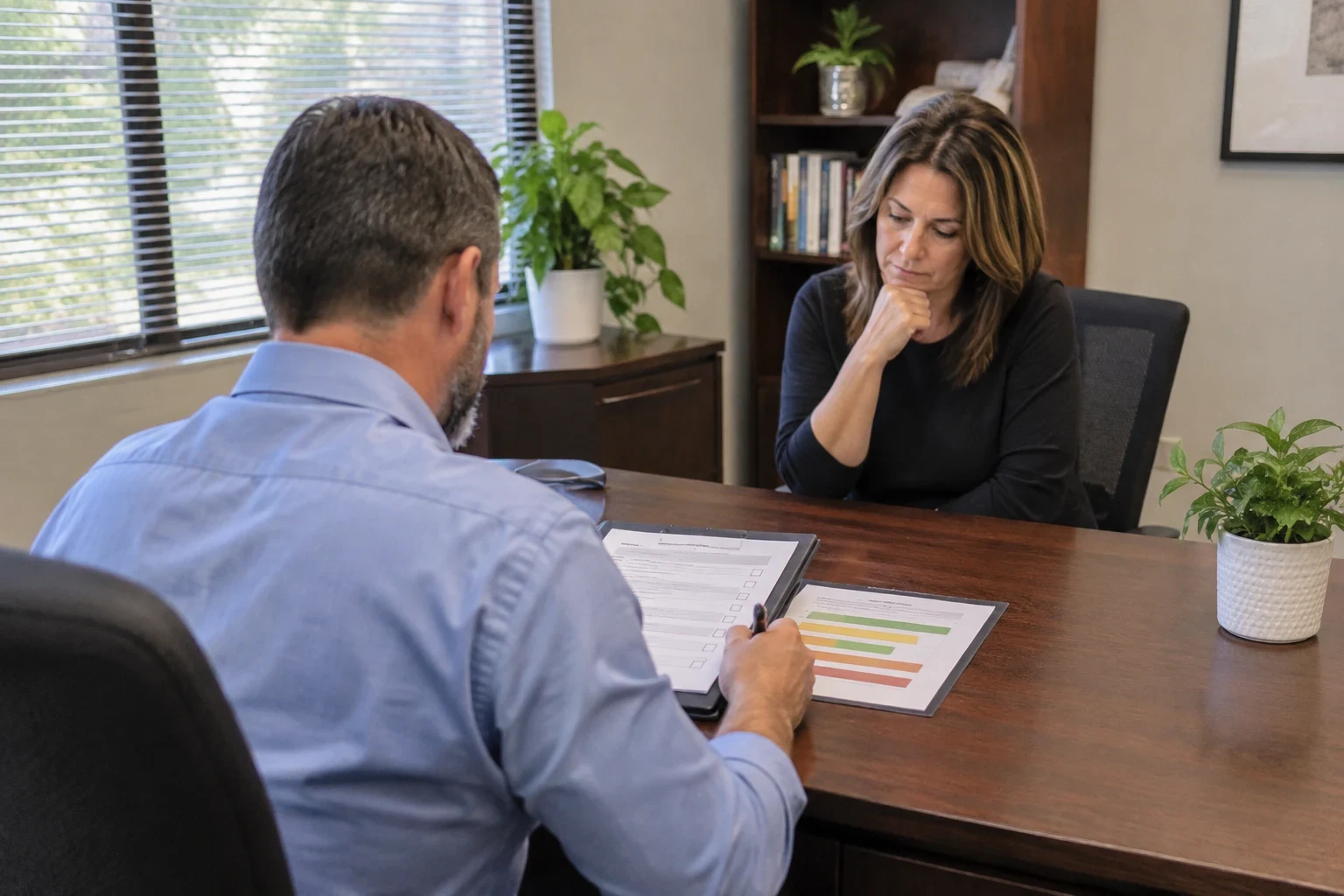
We look at your company the way a buyer or successor will, then tell you plainly what's ready and what isn't. Owner dependence, customer mix, clean books, key people. You get a short written list of gaps, ranked by how much they matter, from the same two people start to finish.
What an exit readiness assessment is for
Most owners know their business well from the inside. A buyer sees it from the outside, and that view is often harsher. An exit readiness assessment closes that gap before it costs you. We check the things that slow a sale, lower an offer or stall a handoff to family or employees, and we tell you which ones are worth fixing first.
It is the right call when you think an exit is a few years off, or when you honestly don't know if your company could run without you. It is not a sales pitch and it does not commit you to selling. Some owners finish the assessment and decide to keep going for ten more years. That's a fine outcome too.
We're a small team. The person who asks you the first questions is the person who writes your report and walks you through it. You won't be handed off to someone new halfway through.
What we look at
Owner dependence
We map which customers, vendors and decisions still run through you. If the business stalls when you take two weeks off, a buyer will notice, and they will price it in.
Financial records
We review how your books are kept and whether personal and business expenses are mixed. Clean, consistent statements make every later step easier, from a valuation to a buyer's due diligence.
Customer and revenue mix
We look at how much of your revenue comes from your top few accounts and whether those relationships are under contract. Heavy reliance on one customer is one of the most common reasons offers come in low.
Key people and systems
We check whether your managers could keep things moving without you, and whether processes live on paper or only in someone's head. We also note who would be hard to replace if they left during a transition.
Personal readiness
We ask what you want your life to look like after the exit, and what you need from the deal to get there. A company can be ready while its owner is not, and that matters just as much.
Signs it's time for an assessment
You're the bottleneck
Most calls, quotes and approvals still land on your desk. That's normal for a growing company, but it makes a clean exit hard.
Someone asked if you'd sell
An unsolicited offer, even a casual one, is a good reason to find out where you stand before you answer.
You've thought about retiring but have no date
Owners who start early have more choices. Owners who wait often end up selling on someone else's schedule.
A family member or manager may take over
An internal succession still needs a business that can run without you. The assessment shows what has to be in place before that handoff can work.
Your books would make a buyer nervous
If you'd hesitate to hand your last three years of statements to a stranger, that's worth knowing now, not during due diligence.
How the assessment runs
- 1
A free first conversation
First comes a free 20-minute phone conversation with our co-founder. Share where the business is and what's on your mind. If an assessment isn't worth doing yet, we'll say so.
- 2
Questions and documents
We send a short, plain list of what we need, mostly recent financial statements and a handful of questions about daily operations. Anything you hand over stays confidential.
- 3
Working sessions with you
We sit down together at our office, or by phone and video, and go through your answers. Owners in Arlington, Mansfield and nearby towns often pick video. Most of the useful findings surface in these sessions.
- 4
Your written findings
You get a short report that ranks each gap by how much it affects value and how hard it is to fix. We go through it line by line with you, and you decide what, if anything, comes next.
What affects the cost
We don't put a number on the fee until we know what your company looks like. The price comes down to how much ground we have to cover and what shape your records are in. Our co-founder explains the fee by phone before any work begins, so nothing comes as a surprise later.
- Size and complexity
- Several entities, locations or partners mean more to review. A company with one owner at one site moves faster through the assessment.
- State of your records
- Organized financials go quickly. If statements need sorting out first, that adds hours.
- Number of owners
- When two or more owners have different goals, we spend extra time making sure each one is heard.
- How deep you want to go
- Some owners want a quick read on the biggest gaps. Others want detail on every area. We'll suggest a scope that fits where you are.
Exit readiness assessment questions
Something not covered here? (972) 992-7616
How is this different from a business valuation?
A valuation puts a number on your company today. The assessment explains why the number is what it is and what is holding it back. Many owners do both, and our Business Valuation page explains that service in more detail.
Does doing an assessment mean I have to sell?
No. The assessment tells you where you stand, and that is all it does. Nobody here will push you toward a sale or hold you to one. Some owners read the findings, fix a few things and keep running their company for another decade.
Will my employees or customers find out?
That decision stays with you. Our work is with the owner, and what you share is kept confidential. If a manager's input would help, we'll plan that conversation with you before anyone else is involved.
What happens after I get the report?
That's up to you. Some owners fix the gaps on their own. Others ask us to help through Value Enhancement Planning or a full Exit Planning engagement, with the same people who did the assessment.
How early should I do this?
Earlier is better. Fixing owner dependence or customer concentration can take a few years, so starting well before you want to leave gives you room to act.
Find out where your company stands
A short talk is the easiest first step. Our co-founder will listen, answer your questions and tell you straight whether an assessment is worth doing now.