
ServicesValue Enhancement Planning
Value Enhancement Planning in Grand Prairie
Most companies are worth more than their price shows. Buyers discount for owner dependence, messy books and a few big customers. We find the gaps that cost you the most, build a plan to close them, and stay with you while the work gets done.
What value enhancement planning is
It is the work between knowing what your business is worth and getting more for it. A valuation gives you a number. This plan tells you why the number is what it is, and what you can change.
Buyers and lenders pay for cash flow they believe will keep coming after you leave. Anything that makes them doubt it pulls the price down. That might be a business that only runs when you're there, a single customer who makes up a big part of sales, or books a buyer's accountant can't follow. Fixing those things takes months, sometimes a couple of years. Start early and you sell on your terms instead of a buyer's.
We're a small team. The person who reviews your numbers on day one is the same person on your quarterly check-ins. You won't explain your company twice.
What the work includes
- A baseline valuation
- First we run a business valuation so there's a real number to measure progress against. If you had one done recently, we can build from it.
- The value drivers, ranked
- We study how much the company leans on you, how spread out your customers are, how much revenue repeats, your margins, the strength of your managers and how clean your financials are. Each one gets ranked by how much it moves your price and how much effort it takes to fix.
- Cleaner financial statements
- We help you pull personal costs out of the business and write down your add-backs. A buyer's accountant should be able to follow your profit without guessing.
- A written action plan
- You get a short plan that names who does what, by when, and what each step should change. It covers the few moves that matter most, not a long wish list.
- Regular check-ins
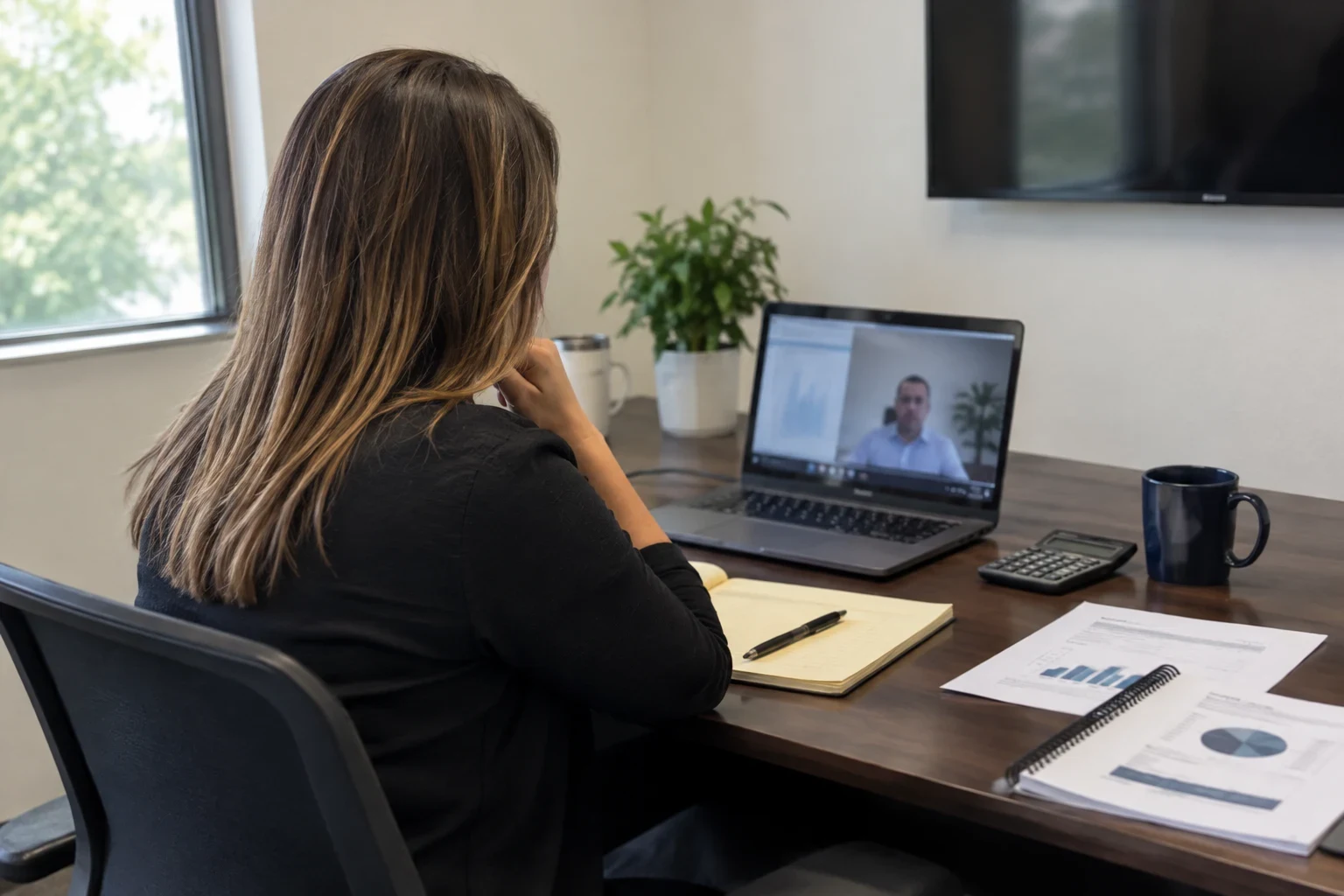
- We meet on a fixed schedule at our office or by phone and video. We track progress, adjust the plan and keep things going when daily work pulls you away.
When a value plan makes sense
You're the bottleneck
Customers dial your cell, prices live in your head and no decision gets made without you. A buyer reads that as risk and either offers less or asks you to stay on for years.
A few customers carry the business
If losing one account would hit hard, buyers factor that into their offer. Spreading revenue across more customers is one of the steadiest ways to raise value.
Your books mix personal and business
Family vehicles, personal trips and cash deals make profit hard to prove. What a buyer can't verify, they usually won't pay for.
Key deals are on a handshake
Supplier terms, customer agreements and leases that were never written down, or can't pass to a new owner, raise questions late in a sale.
A valuation came in low
If the number let you down, the next question is why. That answer is where this plan begins.
How we work through it with you
- 1
A 20-minute conversation
Our co-founder gets on the phone with you for about 20 minutes. We ask what you want from the business and on what timeline. No pressure, and no obligation to sell.
- 2
Measure where you stand
We collect your financials and talk through how the company actually runs each day. Then we set your baseline value and mark the gaps.
- 3
Pick the few that matter
We review the ranked list together and choose the two to four changes to start on first. You set the pace.
- 4
Do the work, check in often
You and your team make the changes with our help. We meet on schedule, keep notes and speak up when something stalls.
- 5
Measure again
Once the main steps are done, we update the valuation so you can see what moved. From there you decide to keep building, plan a sale or move into exit planning.
What moves the price of this work
No two companies start from the same spot, so we quote after we've looked at your numbers. Before any work begins, we lay out the scope in plain terms. You'll see what you're paying for and the reason behind each part.
- How big and tangled the company is
- One location selling one thing is a lighter lift. Several sites, product lines or legal entities mean more to sort through and more time.
- The shape your books are in
- Clean, accrual-based statements let us get moving quickly. Years of mixed or missing records need cleanup before we can measure a thing.
- How many problems you take on
- Fixing owner dependence by itself is a smaller project than reworking pricing, contracts and management roles all at once.
- How long you want us involved
- Some owners want the plan and a handful of check-ins. Others keep us close for a year or longer. More time costs more, but it keeps the changes from stalling.
Questions owners ask about value enhancement
Something not covered here? (972) 992-7616
How long before I see a higher value?
Some gains show up in a few months, like tidier books or customer agreements put in writing. Others take a year or more, such as growing a manager who can run the place without you. We tell you what to expect from each step before it starts.
Do I have to be planning a sale?
No. A company with steady cash flow that doesn't lean on you every day is a better one to own. Plenty of owners do this work and keep the business.
Will my employees find out?
That's your call. The work stays confidential, and we meet at our office or by phone and video, not on your floor. If a change needs your staff, we help you explain it as a better way to run the company.
Who actually does the work, you or my team?
Both of us. We handle the analysis, write the plan and track the results. Your people make the operating changes, since they'll be running things once you step back.
How is this different from an exit readiness assessment?
An exit readiness assessment measures how prepared you and your company are to leave. This plan is the follow-through on the value side. A lot of Grand Prairie owners do the assessment first, then move into this work.
Find out what's holding your price down
One short conversation is enough to see where your company stands and where to begin. You'll speak with our co-founder, and the same small team stays on your work after that.